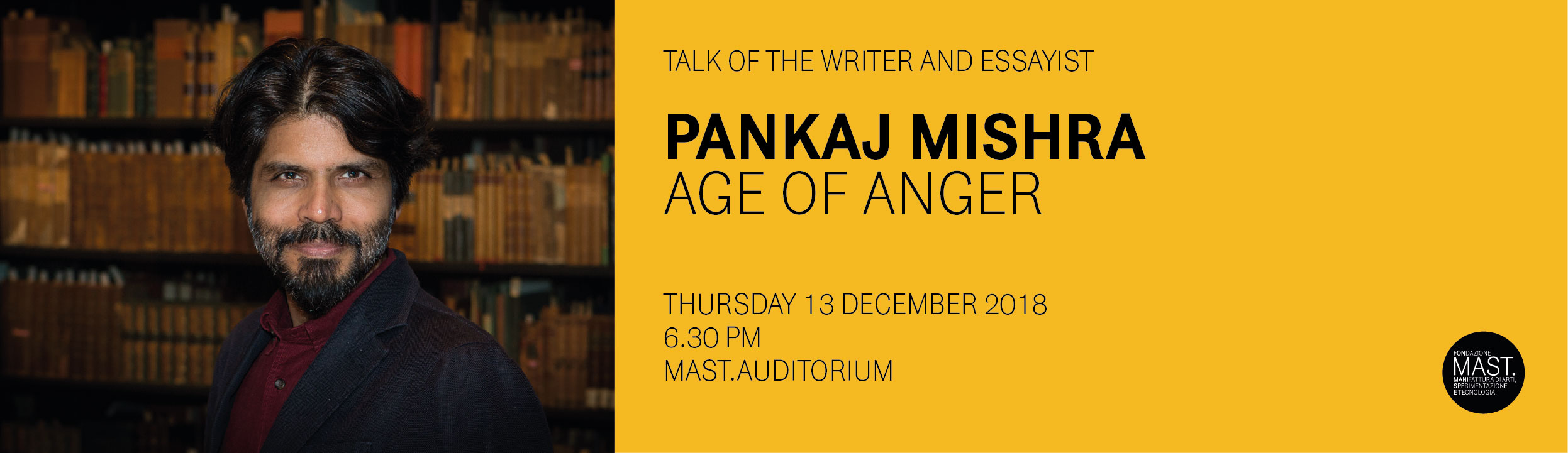
THURSDAY 13 DECEMBER 2018
6:30 PM
MAST.AUDITORIUM
TALK
PANKAJ MISHRA
AGE OF ANGER.
Thinking of Asia in the Post-western World
Introduction by Urs Stahel
What is the common link between events that seem so different and distant, like the electoral success of Donald Trump in the United States, the lure of the Islamic State for young people in many countries, Brexit, or the victory of Narendra Modi’s Hindu nationalists in India? How can we explain the origins of this great wave of paranoid hatred that seems to be sweeping the world? Pankaj Mishra responds to our bewilderment by turning his gaze back to the 18th century before returning it to the present. In his latest book, Age of Anger, the author retraces the common thread running through so many of today’s events to the promise heralded by Enlightenment: a future of justice, equality, and prosperity which was revealed, for most of humanity, to be just an illusion, if not outright deception. Those excluded from that new world react in awful ways, whether with intense hatred towards made-up enemies, attempts to recreate an imaginary golden age, or self-assertion through savage acts of violence. It was from the ranks of the poor that 19th-century militants drew their recruits: angry young men became nationalists in Germany, messianic revolutionaries in Russia, anarchist terrorists throughout the world. Now just as then, technology, the myth of wealth, and individualism drive many millions of people in a “demoralised” world, uprooted from tradition yet still far from modernity – with the same, terrible results.
Pankaj Mishra is a novelist and essayist born in northern India in 1969. His articles have been published in the New York Times, the New York Review of Books, the Guardian, the New Yorker, the London Review of Books, the Bloomberg View, as well as other publications in the United States, United Kingdom, and India. In 2014 he was awarded the prestigious Windham-Campbell Literature Prize by Yale University. His latest book is Age of Anger: A History of the Present, 2017).