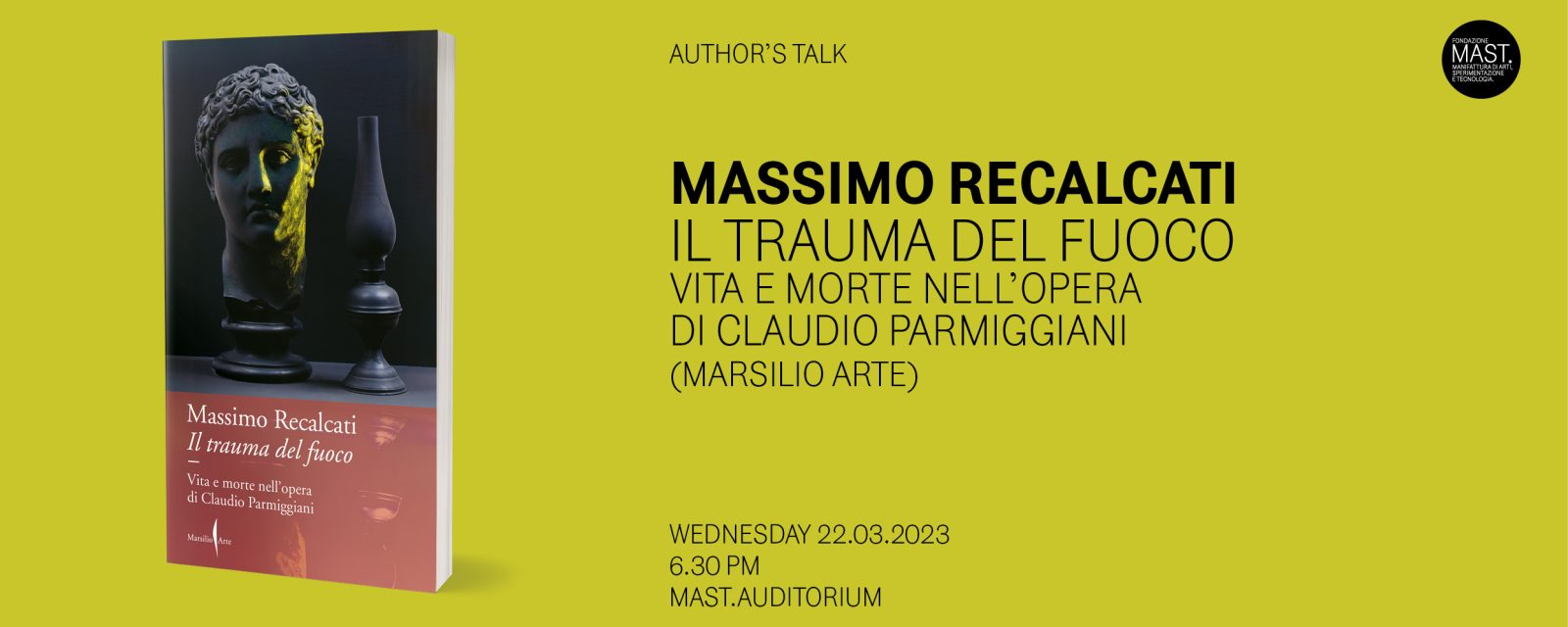
An investigation into the poetics of Claudio Parmiggiani, in which Massimo Recalcati, the author of this book, reflects on the enigma of each of his works of art. The author’s interpretation becomes an extraordinary lesson on the concepts of creation and repetition, life and death, anguish and wonder. A celebration of the power of silence, as an antidote to loud contemporary language.
Is it possible to make the invisible visible, to give a face to the inexpressible, to represent the absolute? Reflecting on the challenge at the heart of great art throughout history, Massimo Recalcati engages in a dialogue with the poetics of Claudio Parmiggiani, one of the leading figures of the Italian international avant-garde, and explores the timeless and counter-current themes in his work: the relationship between transcendence and immanence and between light and shadow, the friction between those who mean something and their meanings; the disruptive power of fire; and the residue that “does not fall into nothingness”.
In an era marked by the predominance of ephemerality and narcissistic exhibitionism, making art involves choosing withdrawal, distance, and oblivion. In this way, the space for prayer, poetry, and invocation addressed to the Other is preserved. “To subtract, to conceal, to protect”, Recalcati insists, “rather than to show, to manifest, to exhibit. The noise of the world fades away, the sound of simple communication is disrupted, and the tautological inflation of images is suspended. What remains? Nothing, that is, everything.”
Massimo Recalcati is one of the best-known psychoanalysts in Italy. His numerous works have been translated into several languages. He taught Art Psychology at the University of Bergamo from 2004 to 2009. On the topic of art, he has published: The Miracle of Form: Towards a Psychoanalytic Aesthetics (2007), Melancholy and Creation in Vincent Van Gogh (2014), The Mystery of Things: Nine Portraits of Artists (2016), Alberto Burri: The Great Cretto of Gibellina (2018, with photographs by Aurelio Amendola)