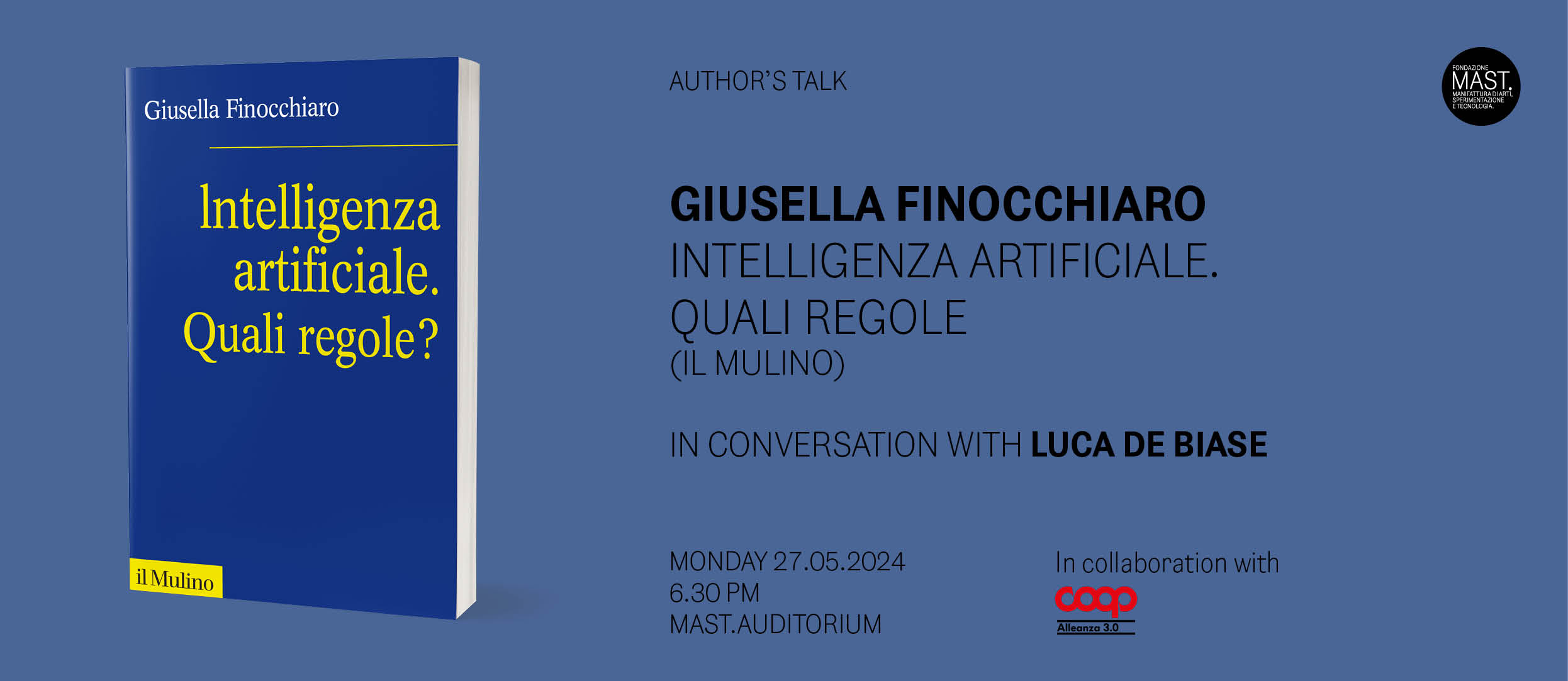
In conversation with Luca De Biase
Artificial intelligence has now become part of everyday conversations: it intrigues, it frightens, it arouses suspicion as perhaps nothing else has ever done. And so it has become a myth to which we link words that deceive, constructing disturbing and unrealistic narratives. Yet, its applications in healthcare, to give a concrete example, are many and useful. But how can we live with them? If an AI system causes damage, can it be held responsible? How are the personal data it feeds on protected? New legal rules are being invoked to govern this new phenomenon: but what rules are really needed? Certainly a global system of rules will have to be aimed at, since we are not dealing with a phenomenon that can be contained within geographical limits. The European Union is about to pass a new regulation, but what about the rest of the world? The book reflects on these and other questions, which are not and will not be easy to answer.
As part of the series Le Voci dei Libri, in collaboration with Coop Alleanza 3.0
Giusella Finocchiaro, teaches Private Law and Internet Law at the University of Bologna. A court-appointed lawyer, she is the founder and partner of DigitalMediaLaws, a legal boutique specialising in new technology law. Former President of the UNCITRAL Commission on e-commerce and of the Commission appointed by the Ministry of Justice to draft the decree on the protection of personal data, she is legal expert at the World Bank and UNIDROIT legal expert in the “Digital Assets and Private Law project”. She was President of the Fondazione del Monte di Bologna e Ravenna, of which she holds some corporate positions.
Luca De Biase is innovation editor at Il Sole 24 Ore and Nova24, of which he was founder, and deals with technological innovation, territorial development, rights and duties on the use of the internet, the world of innovative start-ups and the knowledge economy. He teaches at the University of Pisa and holds master’s degrees at Sissa in Trieste and at Sant’Anna University and Stanford University. He is Director of the Research Centre on the Economics of Language Services Imminent and of the Media Ecology Research Network of Reimagine-Europe in Brussels.