Bernd & Hilla Becher
History of a Method
Curated by Gabriele Conrath-Scholl, Max Becher e Urs Stahel
THE EXHIBITION
Around 1960, with the decline of industrial photography and the profound changes in the global economy, Bernd and Hilla Becher (1931–2007 and 1934–2015 respectively) began work on their famous photography projects, where the images were often arranged in blocks or grids.
The exhibition is divided into 10 sections, providing an in-depth analysis of the themes and methods underpinning the Bechers’ work.
MAST.Gallery 1
Industrial Landscapes
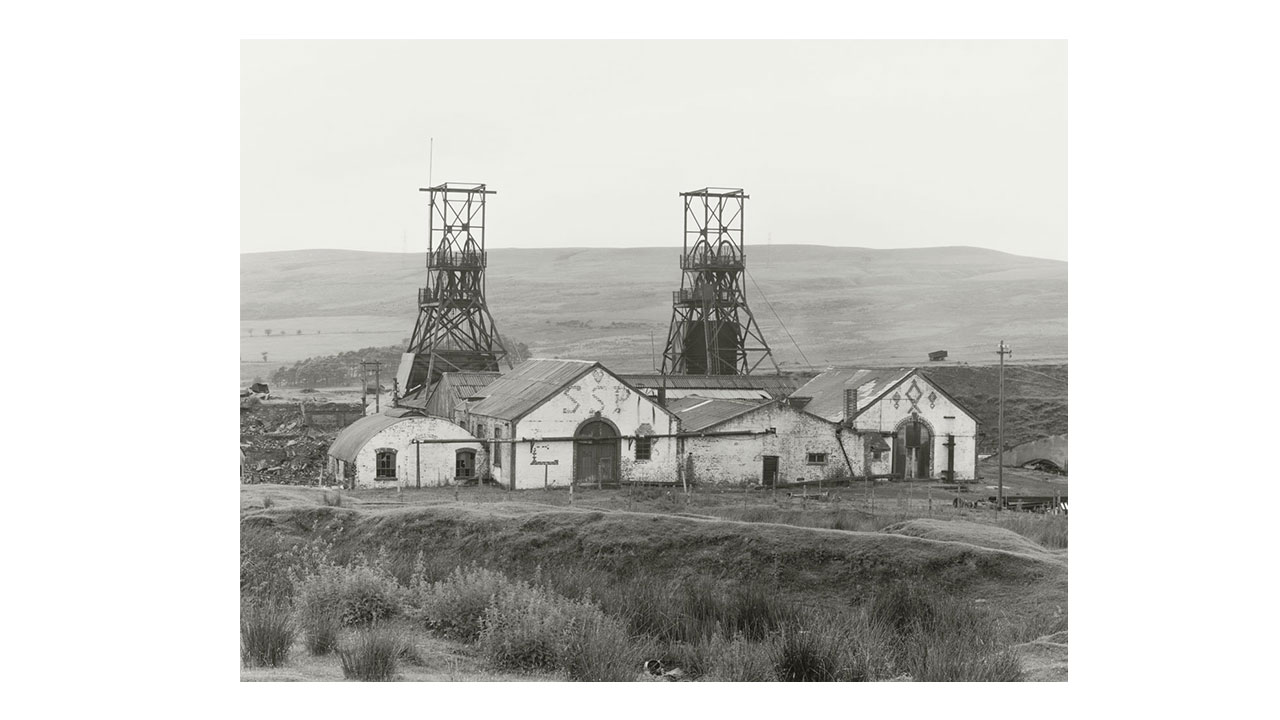
This section opens the exhibition with views of functional buildings and industrial structures, the focus of the two artists’ work since their early days. The images of blast furnaces, lime kilns, mines and gravel plants, taken between 1962 and 1999 in various countries, offer a significant insight into this aspect of their work.
Industrial sites: the Ewald Fortsetzung coal mine
The Bechers’ vast body of work consists of around two hundred documentation projects, each containing up to six hundred negatives. One of these projects focuses on the Ewald Fortsetzung coal mine in Recklinghausen, in the Ruhr industrial area. The photographs, taken between 1982 and 1985, provide a panoramic view that presents the mining plant in different groups of images. These groups depict many aspects of the mining architecture. The photographers’ perspective changes from wide angle landscapes to close-up details.
One object, different points of view (Unfoldings)
This section brings together groups of photographs based on the systematic juxtaposition of
images depicting the same subject from different viewpoints and at comparable distances. This
enables the viewer to understand the structure of the specific object far better.
Typologies
Typologies are groups of images made up of a minimum of nine and a maximum of twenty-four photographs, arranged in a grid. They are the result of a comparative analysis and classification of the forms and structures of industrial buildings. The exhibition presents typologies created from the 1960s to the early 2000s in different countries, including the twenty-four-part typology of coal bunkers, shown with archive materials printed posthumously.
Houses
From 1968 onwards, the Bechers broadened their focus to include houses for companies’ workers and employees. In particular, their attention centered on the social housing blocks being built at the time in the Ruhr region and the Rhineland, near coal mines and steelworks. The threeor four-storey residential blocks featured in the exhibition were designed by post-war architects to provide new homes for the population, still struggling to recover from the bombings that had devastated the industrial areas.
An object in various forms of representation: framework houses
This section explores the theme of representation and the rigorous description of the subjects. The framework house in Birlenbach is presented in three ways: as a single frontal image, as a series of eight photographs providing a three-dimensional view of the object, and, finally, included in a fifteen-part typology.
MAST.Gallery 0
Anonymous sculptures
With more than forty original photographs and texts written in 1970, this section presents a wide selection of the images included in the publication Anonyme Skulpturen. Eine Typologie technischer Bauten. The project originated with the exhibition Anonyme Skulpturen, held in 1969 at the Kunsthalle Düsseldorf, an event that proved crucial in establishing the Bechers’ work within the circles of Minimalist and Conceptual art.
Bernd Becher: early works
A special section explores the early works of Bernd Becher, who trained first as a decorative painter and later as a graphic designer. Drawings and early photographs bear witness to his gradual shift towards photography, a direction that became firmly established following his travels in Italy and Spain and his meeting with his future wife Hilla Wobeser.
Hilla Becher: early works
This section traces Hilla Becher’s evolution. She was trained in Potsdam as a photographer and continued her studies at the Academy of Fine Arts in Düsseldorf, where she set up the first photography studio. In the 1960s, she experimented with various modes of representation, exploring the formal language and structures of natural materials.
Publications and printed materials
Documentation of the Bechers’ publishing activities takes the form of monographs and printed materials. From 1977, they collaborated with the Schirmer/Mosel publishing house, producing twenty publications that are true masterpieces from both an artistic and editorial perspective. Their graphic design training is also reflected in the designs of invitations, flyers and posters.
MAST. Foyer
La Scuola di fotografia di Düsseldorf
In dialogue with the exhibition, the MAST Foyer presents a focus dedicated to the photographers of the Düsseldorf School of Photography, with works from the MAST Collection, shedding light on the legacy and long-lasting relevance of the Bechers’ method through the research of subsequent generations. The School developed around the Düsseldorf Academy of Fine Arts, where Bernd Becher taught photography from 1976 to 1996, and the couple’s studio in Düsseldorf-Kaiserswerth, a hub of exchange and collective work.
In the Foyer, photographs by some of the Bechers’ most renowned students are on display, including Salinas and Schiesser Diptycon by Andreas Gursky, Full Scale Mock Up 1, 2, 3 by Thomas Struth, works from the Machines and Photograms series by Thomas Ruff—artists to whom MAST has dedicated major solo exhibitions in recent years—as well as several works by Tata Ronkholz.